A plain-language summary of a published scientific study. It is educational and does not replace medical advice.
The study: Gautam M et al., Neurobiology of Disease, published online 19 June 2026. A study in mice. Free full text.
What the researchers studied
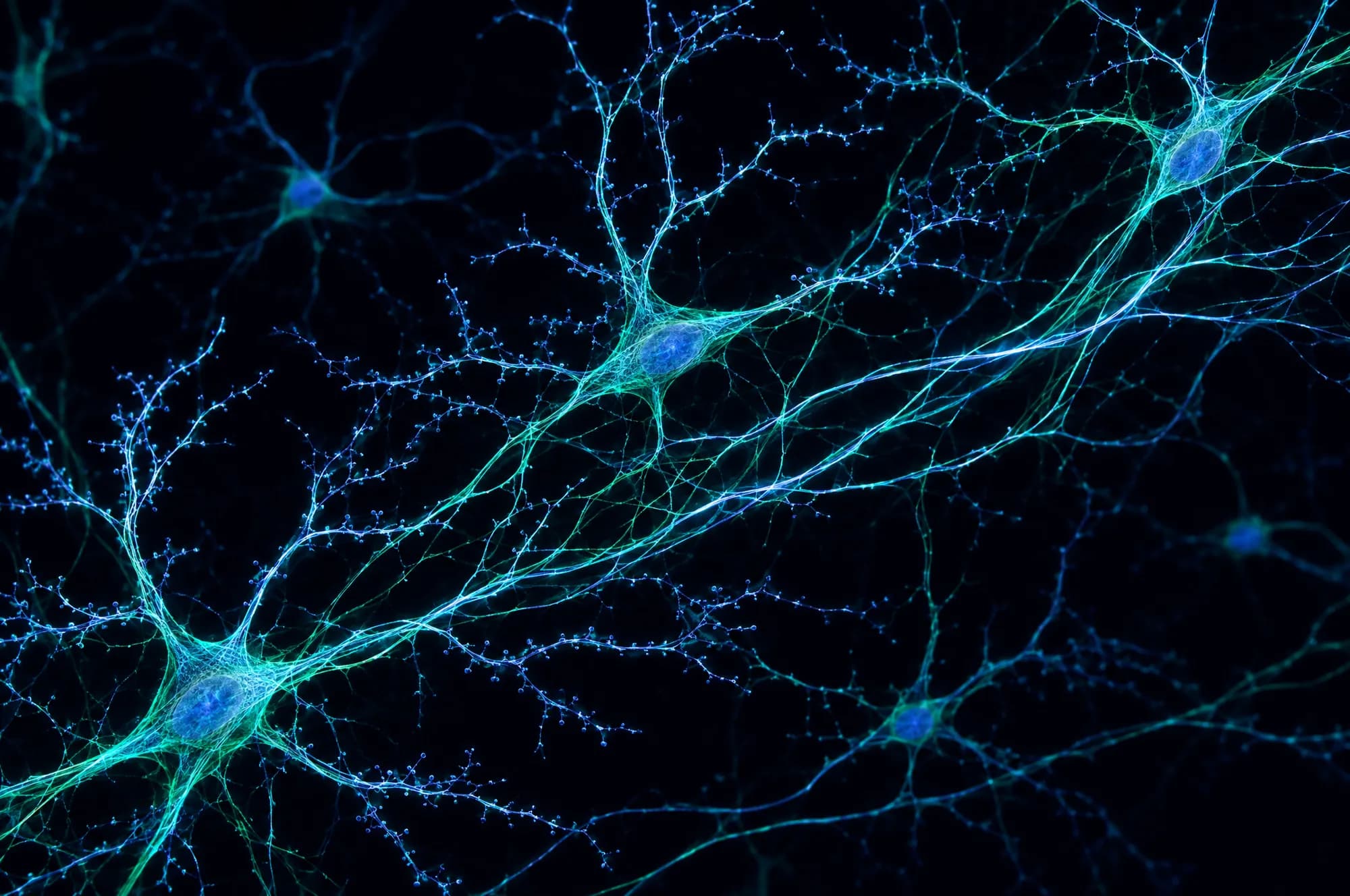
Variants in the SPAST gene cause about 40% of all cases of hereditary spastic paraplegia, yet it is still not known exactly why the motor neurons in the brain are vulnerable. The team used mice carrying the SPAST C448Y variant and isolated these neurons (corticospinal motor neurons) before symptoms appeared, at two different time points. They then analysed all the proteins inside them.
What they found
- The neurons' protein make-up was already changing before symptoms. Problems with the cell's internal "skeleton" and with the stability of organelles such as mitochondria (the cell's power plants) seem to contribute to their vulnerability.
- NU-9, a compound that had improved similar problems in other models of motor neuron disease, was given to the mice for 100 days.
- NU-9 significantly prevented degeneration of the corticospinal axons, restored the structure of mitochondria and the endoplasmic reticulum, and reduced abnormal build-ups inside the neurons.
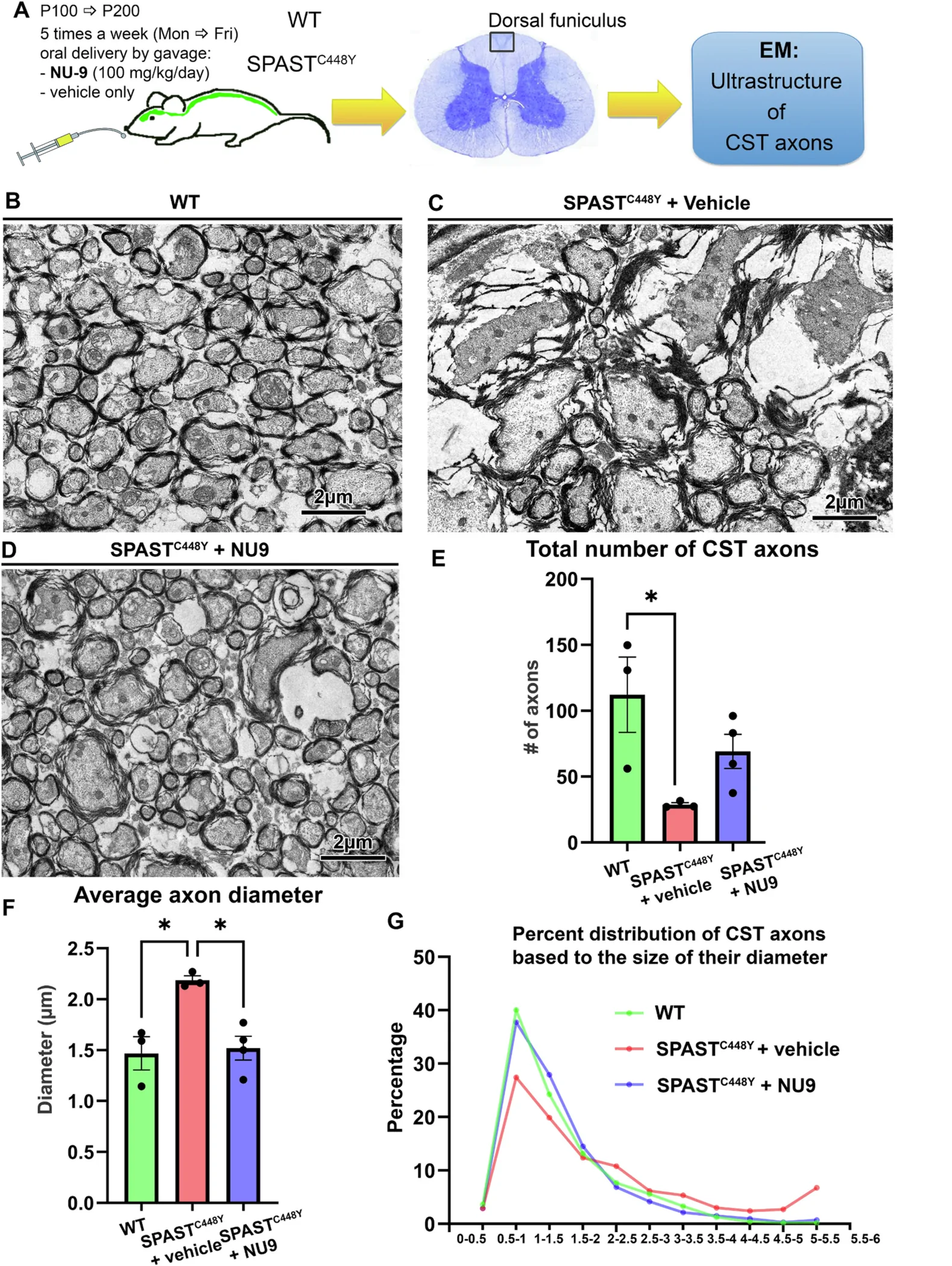
Figure 6 from the study: (A) the treatment design; (B–D) corticospinal tract axons under the electron microscope in healthy mice (B), untreated SPG4 mice (C) and SPG4 mice treated with NU-9 (D); (E–G) the number and diameter of axons in the three groups. Source: Fig. 6 from Gautam M et al. “Proteomic analysis reveals early pathological defects in corticospinal motor neurons of a spastin model of hereditary spastic paraplegia, which are improved by NU-9 treatment.” Neurobiol Dis 2026. doi:10.1016/j.nbd.2026.107494. Licensed CC BY 4.0.
What it means for families
The study shows what goes wrong in motor neurons before the first symptoms and suggests a treatment direction to test further. NU-9 is not an approved medicine and has not been tested in people with SPG4. On 6 November 2026 there was no registered clinical trial on ClinicalTrials.gov of a treatment that changes the course of SPG4.
What the study does not tell us yet
The results come from mice with a single SPAST variant. It is not known whether the effect would repeat in people, what dose would be safe, or whether it would help once symptoms have appeared.
References
- 1.
Gautam M, Priego M, Quintanilla C, et al. (2026). Proteomic analysis reveals early pathological defects in corticospinal motor neurons of a spastin model of hereditary spastic paraplegia, which are improved by NU-9 treatment. Neurobiology of Disease 227:107494.
PMID 42320547Last verified: 7 November 2026
In SPG4 mice, the experimental compound NU-9 reduced axon degeneration. Not tested in people for SPG4.
- 2.
U.S. National Library of Medicine (2026). ClinicalTrials.gov — studies listing SPG4 / SPAST (search of 6 November 2026). ClinicalTrials.gov.
clinicaltrials.govLast verified: 6 November 2026
At the time of the search there was no interventional study of a disease-modifying treatment specific to SPG4.
Further sources
- DOI: 10.1016/j.nbd.2026.107494 (opens in a new tab)doi.org
- PubMed Central: PMC13573564 (opens in a new tab)pmc.ncbi.nlm.nih.gov