A plain-language summary of a published scientific study. It is educational and does not replace medical advice.
The study: Pedullà G et al., Journal of Neurogenetics, published online 18 May 2026. A mini-review of the literature. Only the abstract is freely available.
What the researchers studied
Hereditary spastic paraplegia (HSP) has long been considered monogenic: a variant in a single gene explains the condition. SPG4 (the SPAST gene), SPG7 and SPG11 remain the central examples. Large genetic studies show, however, that up to 40% of cases have no single-gene explanation. The authors reviewed the evidence for an oligogenic model, in which a few variants in different genes would add up and cause the condition together.
What they found
- Some statistical analyses and case reports, for example very rare variants in SYNE1, CAPN1 and PGAP1, suggest this mechanism might operate in some unsolved cases.
- The authors stress, however, that the evidence is preliminary and exploratory, not enough to treat the oligogenic model as validated.
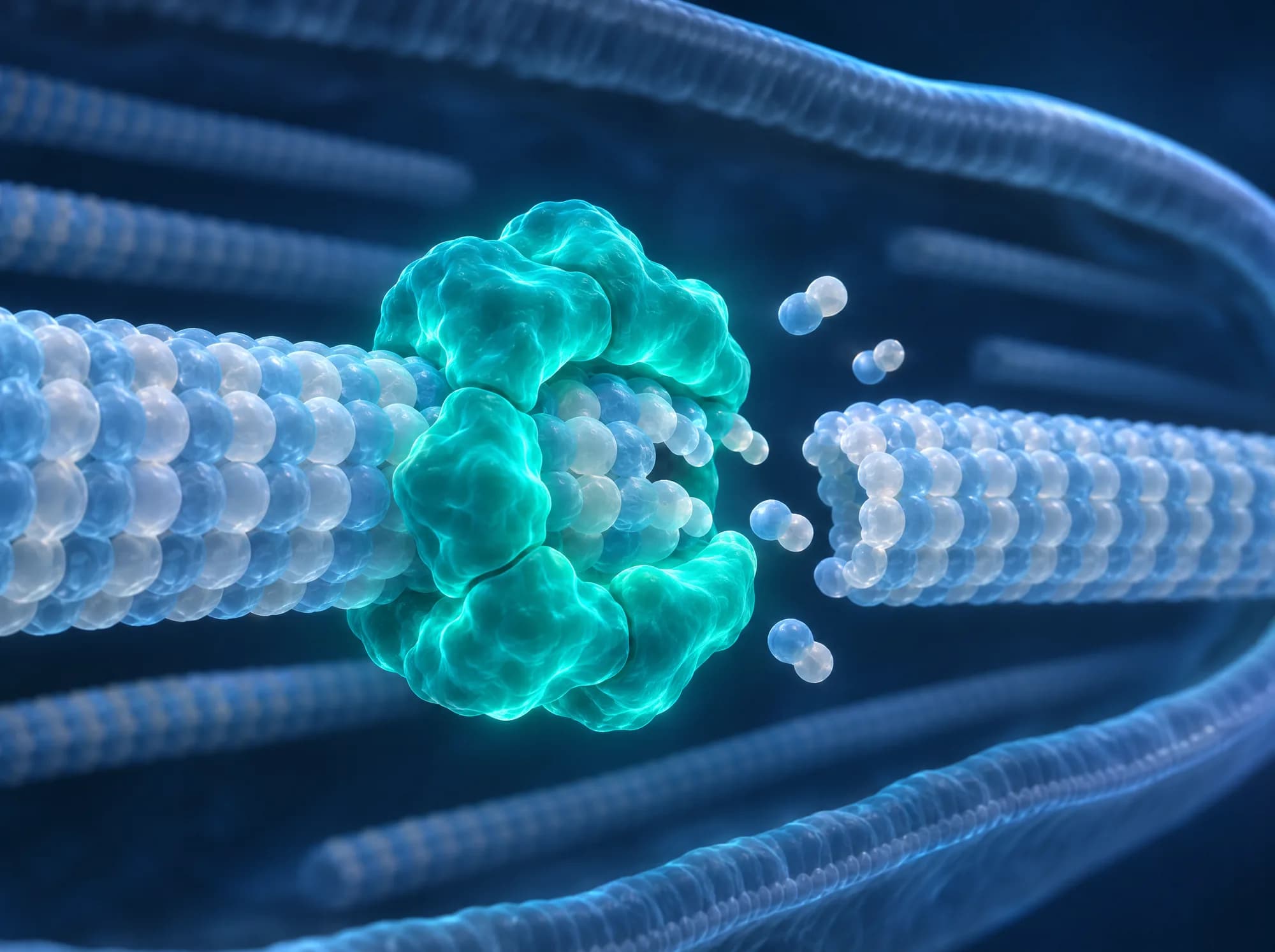
- HSP genes seem to affect the same few processes in the cell: microtubules, the shape of the endoplasmic reticulum, fat metabolism, mitochondria and transport inside the cell.
What it means for families
- For SPG4, the classic explanation, a variant in SPAST, still holds.
- For families whose tests found no cause, the authors recommend exome or genome sequencing and careful genetic counselling. The oligogenic model should be used only as a hypothesis to test in selected cases, not as the default explanation.
- If several variants contribute, the chance of passing the condition on is expressed as a probability rather than a simple rule.
What the study does not tell us yet
This is a short review based on evidence that is still incomplete. The authors call for functional studies in cells and animals to understand how genes interact.
References
- 1.
Pedullà G, Morelli M, Gagliardi M, et al. (2026). Genetic architecture of hereditary spastic paraplegia: from monogenic to oligogenic models. Journal of Neurogenetics 40(1–2):53–59.
PMID 42150761Last verified: 7 November 2026
Up to 40% of HSP cases lack a single-gene explanation; the oligogenic hypothesis is still preliminary.